As you begin the New Year, are you optimistic or pessimistic? Is the glass half full or half empty? Do you face life’s challenges with hope or despair? It has been said that an optimist sees opportunity in every problem; a pessimist sees a problem in every opportunity. When faced with two evils, the pessimist chooses both. Both optimists and pessimists matter. The story goes that an optimist invented the airplane, but a pessimist invented the parachute. We need both: optimists drive progress, while pessimists encourage caution.
I love the Christmas season and am always sorry to see it end. The beautiful lights and decorations are amazing; however, what I enjoy most is the spirit of goodwill and kindness that seems to permeate wherever we go. I love the fact that people say Merry Christmas in all kinds of situations. Whether we realize it or not, it is like we are telling Jesus “Happy Birthday” several times a day. Our Savior came to save us, yet Scripture states in John 10:10 that Jesus also came to give us an abundant life. Abundant life does not necessarily mean a life without struggles, but rather a life full of purpose and meaning.
From the time I was a little girl, I always wanted to be a mommy. I played with my dolls and took very good care of them. I always had baby girls because at that point in my life, boys were a nuisance. And it goes without saying that even though my babies were not always well-behaved, I was an excellent mommy. My pretend world took me to all kinds of places and into all types of adventures. My imagination evolved as I got older, but I was still the hero in every scenario. I always got the bad guy or saved the lost kitten.
Well, we all grow up and realize the world of pretend is a lot easier than the real deal. Our struggles begin with walking, talking, and being potty-trained. Those things don’t sound that serious, but to a child, they are monumental. Without those skills, the rest of life will elude us. Some children cannot talk or walk, so we need to be very thankful that we are blessed with these gifts. Lord, thank you for giving me a mom and dad who taught me so many things. Not just how to walk and talk, but about life and its principles.
When we enter school, we are taught that letters on a piece of paper make words. It is such a foreign concept. We also learn how to use numbers to add and subtract, and one day we discover that those same letters we used to read can represent numbers. What sense does that make? Without the struggle of learning to read or to add and subtract, the rest of my education would not have been possible. I have had so many teachers over my lifetime. They were so patient with me. I wasn’t someone who learned easily. I studied many hours doing homework and studying for tests. Perhaps that is why I am a decent teacher today. Lord, thank you for the teachers that you put in my life. The first ones were my parents, then the many other people you have put into my path, and most of all, my husband. Without them, I would not be serving as a teacher today.
I have also learned many things from books and other forms of literature. Before I got married, I read about being a good wife. When I became a mother, I read profusely. I read Christian books about raising infants to raising teenagers. As I came across different challenges in teaching, I read about various ways to reach children academically as well as behaviorally. The greatest source of wisdom is found in God’s Word. There is no area of life that the Scriptures do not address. “For the Lord giveth wisdom: out of his mouth cometh knowledge and understanding.”Proverbs 2:6. It is just sad that it has taken me so long to learn some things. Thank you, Lord, for the sacrifices and the struggles of the people who made your written Word possible.
As I travel through the memories of my life, I would be remiss if I did not thank the Lord for the struggles. It took a while, but I have learned that the way we handle the lessons that cross our paths will determine in which direction we grow. Whether we become a strong oak, a wilted flower, or a briar that hurts those in our paths is totally up to us. Our struggles will make us bitter or better. What choices are we going to make?
I have not always made the right choices, but I have learned quite a bit over my life. My parents always taught me I could do anything I put my mind to. They pushed me to be better than I was. I worked 30 hours a week, went to college full-time, and was active in church. I had to learn how to budget money and time and stay faithful to God. This may not sound important to you, but it prepared me for even bigger challenges I would face down the road.
As life progressed, I learned more and more that the only way I could do anything was if the Lord held my hand and carried me through. Throughout our marriage, there have been times when the cupboards were bare. My husband has always had tremendous faith, and many times, I hung on to his coattail. We trusted God to supply, and He never let us down. We were very frugal; our Lord stretched what we had, and our family never missed a meal. Likewise, in the ministry, there have been lean times. When we started the school and the radio station, we did not know where the money was coming from, but God always provided each step of the way. We never saw miles down the road, but just inch by inch. We have seen God provide through floods and lightning strikes. Thank you, Lord, for the struggles in the lean times that helped us to trust You.
In all of our lives, we experience emotional struggles that test our faith. A loved one is sick, and we aren’t sure if they are going to make it. We have a rebellious child who is distant from God, and we don’t know how to reach them. People in our lives are hurting, and we can’t help them. The circumstances are far beyond our control. I have had many difficult experiences over the years. Thank you, God, for allowing me to grow through life’s experiences.
I have observed many people over the years. Some have become very bitter and angry, while others seem sweet and kind even when they are hurting. Pondering over the different individuals and what makes each of them different, I realize there is one thing that stands out. They have taken the first and second commandments seriously and have grown so much that they put these principles into practice every day.
“Jesus said unto them, Thou shalt love the Lord thy God with all thy heart, and with all thy soul, and with all thy mind. This is the first and greatest commandment. And the second is like unto it, Thou shalt love thy neighbor as thyself.” Matthew 26:37-39
These beautiful saints strive to love God more than anything else in their lives, which makes the second commandment fall right into place. They love others more than themselves. So, every decision and action they make is filtered through their love for God and their love for others. They are not selfish because they love others more than themselves.
Thank you, Lord, for the people who have shown me by their lives how to handle hardships and struggles. May I never grow bitter or angry because of difficulties. May I grow closer to you with each problem that I face? May my life show your love wherever I go.
I don’t want to be a grumpy old person. I want to be someone who lets Jesus shine in their life each day. What type of person do you want to be? It is a choice!
Happy Thanksgiving!
Dr. Worthington has five children and twelve grandchildren. She serves as Principal of Pathway Christian Academy in Goldsboro.
“But Mary kept all these things, and pondered them in her heart.”Luke 2:19
I am sure Mary never forgot the angels, the shepherds, the star, or the wise men. These were things that I am sure were burned into her memory. How is your memory doing these days? It appears to me that people forget more things than they used to. So many people miss appointments now that some places even charge a fee for no-shows. Memory loss was once relegated to those with dementia or just growing old, but now I know many young people who seem to be lost in a fog.
As I write this article, it is November 13th. This may be a special day for you. But I don’t remember many November 13ths in my life. I don’t even recall many July 4ths. I don’t remember most of my own birthdays, or Thanksgivings or Easters, for that matter. But I remember Christmas. I may not remember each one of them in the correct order. I may not be able to recall all the specific events, but I remember Christmas—even the ones from over 70 years ago.
What is your favorite Christmas memory? If you had the opportunity to share, what might you recall? Would it be your family gathered around the Christmas tree or the laughter and fellowship of visiting family and friends? Would it be a special kiss under the mistletoe or struggling to assemble a toy? Would it be visiting with relatives or perhaps even experiencing a hardship or illness?
What is it about Christmas memories that seems to make them last longer? Is it just me, or do you have the same experience? Is there some special power in Christmas memories? When I smell Christmas trees, for example, I remember the live trees we always had at home when I was a child. I visited my granddad’s house hundreds of times growing up, but it is the Christmases I usually remember. I remember Grandma’s decorations. I remember the wreath they hung on the door. I remember the aroma coming from the kitchen. I remember her Christmas fruitcake. What is this about Christmas memories?
Another cool thing about Christmas memories is that, even in the middle of July, if you are having a bad day, you can pull one out, and it can lighten your load. Christmas memories can even recenter your life and help you recall who you really are.
Isn’t that what happened to Ebenezer Scrooge in Charles Dickens’s classic story? As the story begins, it would be hard to imagine a more miserly and miserable man than Ebenezer Scrooge, who, among other things, hated Christmas, regarding it as nothing but a “humbug.” But Scrooge was transformed. On Christmas morning after his metamorphosis, he confessed to being “as light as a feather, I am as happy as an angel, I am as merry as a schoolboy.” Yet, the new Scrooge wasn’t only delighted to say “Merry Christmas” to his neighbors rather than “Bah! Humbug”, he actually wanted to spend time with the family he had previously spurned. Relationships mattered to him more than they had in decades. On top of that, Scrooge had come to care deeply about others, expressing his concern with generosity toward people in poverty, a newfound fairness as a boss, and a passionate personal investment in Tiny Tim’s life.
What brought about such a miraculous change in Scrooge? Was it not, in part, the memories of Christmas past? Scrooge became filled with Christmas memories from his pre-humbug life as he also assessed his post-humbug future. Scrooge was transported back to the place where he was a lad in boarding school. When Scrooge was reminded of his boyhood self, left alone at Christmas in his dismal school, Scrooge sobbed with newfound emotion. He then recalled the Christmas parties that old Fezziwig would give to his employees and friends. Suddenly, the cold-hearted Scrooge became strangely warmed, softened by the power of his memories. By the end of the first ghostly visit, Scrooge was well on his way to becoming a new man.
I know this was only a story, it was make-believe, and there are some elements in the story that, as a Christian, you may not appreciate. Still, there is a good reason to believe that powerful Christmas memories can actually make a positive difference in our lives, too. Jump-starting our fondest memories could be a good thing. Positive Christmas memories can enrich your life today. They can help you to live in the present while facing the future with greater delight and a depper understanding. Often, reflecting on the past enables you to experience a more profound sense of who you are and why you are alive.
How should we think about this from a Christian perspective? Here are four brief implications.
First, if we believe that everything that has happened in your life has been allowed by God and that He can use it for ultimate good, then recalling those memories would be a good thing. God wants us to enjoy the good gifts He has given us throughout our lives. God wants you to remember that He has made a long-term investment in your life.
Second, memories can be a pathway to gratitude. As you allow your mind to enjoy pleasant memories, you can pause to thank God for them, and for the people and events they have brought to mind. There is much in Scripture that encourages us to remember the past. Usually, these are memories of what God has done in the past—events that might still be influencing our present. These memories help us always to remember God’s never-ending love and faithfulness in our own lives.
Third, though memories can also bring to mind painful episodes from our past, looking back, we may very well see God’s presence even in those hard times. We might now see how God used those struggles to help us grow to be more like Jesus.
Fourth, research suggests that nostalgia might motivate you to be more understanding and tolerant of others. A little more empathy for others can go a long way to promoting peace on earth. Plus, empathy for those who are suffering might spur you on to greater generosity, as happened with Ebenezer Scrooge.
Perhaps we should all attempt to create a special Christmas memory this year. It could be a fresh reminder of what Christmas is really all about – the birth of our Saviour, Jesus Christ, and the joy of celebrating His birth. Think about it. It doesn’t require a trip to the store, an online purchase, or a large sum of money to make Christmas memories that will last. It often just needs one small investment, a little bit of time.
You see, God designed us for relationships. In other words, He never intended for us to be alone. More importantly, He wants us to remember the gifts He has given us, which are right in front of us every single day. In addition to the gift of His Son, He gave us the gift of our loved ones, our family and friends, and the memories that naturally followed. And now, for me, the memories of more than half a century of Christmases seem to be as fresh as they were the day they were born. These are not tattered, faded black-and-white photographs, but vivid, clear memories of the priceless gift of the abundant life God has bestowed upon me.
Ebenezer Scrooge said, “I will honor Christmas in my heart and try to keep it all the year.” The only real way you can do that is if we retain in our hearts hundreds of Christmas memories. Each one is as unique as a snowflake.
This Christmas, I will hold dear all my memories of the past, yet embrace the excitement and joy of the present, especially when looking into the eyes of my grandchildren and great grandchildren, because I am sure that, as each of them anticipates the future, they will also be building memories. And maybe, I might be in some of those memories. That would be nice, because Christmas memories seem to last the longest.
Dr. Worthington has been in the ministry nearly fifty years and serves as President of Pathway Ministries and Christian Bible College.
No, no, no! This can’t be happening. I can’t squeeze in one more thing. I already have so much to do. With Christmas parties, family gatherings, shopping, decorating, mission activities, and the everyday responsibilities, I don’t have time for this. It is insane.
One of the wonderful things about the celebration of Thanksgiving is all the food! I am sure that at some point in your life, you gathered with family or friends and enjoyed a Holiday feast. Sherry is a great cook, and now the kids often bring their own dishes, so we have an authentic buffet. The food is always so great on Thanksgiving Day, but some of it seems to be even better after Thanksgiving! So, on Friday, we might have turkey sandwiches. I like turkey sandwiches on Friday. They are not bad on Saturday, but by Sunday, Monday, and Tuesday, my taste for Thanksgiving leftovers begins to wear a bit thin. I am now craving a pizza. Enough with the leftovers! Sometimes that happens in the Christian life, also. I wonder if our Lord gets tired of thanksgiving leftovers?
Psalms 138:1“(A Psalm of David.) I will praise thee with my whole heart: before the gods will I sing praise unto thee.”
We could call this a heartfelt thanksgiving. This is more than one day a year. God calls His people to live lives of constant thankfulness. He doesn’t want our leftovers. He should not have to accept a mere acknowledgement that the season for Thanksgiving is upon us, and then we must quickly transition to Christmas! No, as important as the Christmas season is, we must never forsake the spirit of Thanksgiving. I know that commercially, Thanksgiving is just a small bump in the road between Halloween and Christmas, but it shouldn’t be that way for us.
We are called, as Christians, to be different. We are to be a people characterized by wholehearted thankfulness. All of our days should be days of Thanksgiving. As you take a look at Psalm 138, you will find that this Psalm breaks into three sections. Let’s look at what the Psalmist is saying.
The Expression Wholehearted Thanksgiving.
“I will praise thee with my whole heart: before the gods will I sing praise unto thee. I will worship toward thy holy temple, and praise thy name for thy lovingkindness and for thy truth: for thou hast magnified thy word above all thy name. In the day when I cried thou answeredst me, and strengthenedst me with strength in my soul.” Psalm 138:1-3
What is thankfulness? True thankfulness is an expression of godliness. True thankfulness acknowledges that it is God, and not we ourselves, who are the source of our blessings. I submit to you that only a godly man or woman is truly thankful. Thankfulness is a spiritual virtue activated in us by God Himself. A man without Christ really does not know how to be grateful. Oh, he can be thankful for his family or for his health, like anyone else. But, since he doesn’t understand the source of it all, he falls short of real Thanksgiving.
For instance, in Psalm 97:12 we find this admonition: “Rejoice in the Lord, O you righteous, and give thanks to his holy name!” So, who is truly qualified to give thanks? It is the righteous. As we recognize that it is only by God’s steadfast love and faithfulness that we have received our blessings, we begin to understand how bankrupt we are in ourselves. Every good and perfect gift comes from God, and a genuine, heartfelt thanksgiving readily acknowledges that.
The Psalmist here says that he acknowledges his thankfulness “before the gods.” What does that mean? In David’s time, the gods spoken of were the false idols of the pagan nations around Israel. These competed for the attention of Israel and the people of the true God. They promised various blessings through their teachings. But their promises were empty, as these were the false gods of those who did not follow our Lord.
These things were false in David’s day, and they are false in our day as well. You see, we have our own Baals and Molechs all about us that call for our attention. These false gods that would seek the affection of the Church also encompass us. We see all around us. They would divert us from the one true God. These are the pagan philosophies and teachings of our day that promise us rewards and blessings if we follow them. That brings us to our second point:
The Experience of Wholehearted Thankfulness.
“In the day when I cried thou answeredst me, and strengthenedst me with strength in my soul. All the kings of the earth shall praise thee, O LORD, when they hear the words of thy mouth. Yea, they shall sing in the ways of the LORD: for great is the glory of the LORD. Though the LORD be high, yet hath he respect unto the lowly: but the proud he knoweth afar off.” Psalm 138:3-6
David says that he had called on the true God and was honored to sing praises to the Lord. Because of his knowledge of the Lord, David said he had observed four things. He had learned that God always meets our needs (Verse 3), communicates with His children (Verse 4), has great glory (Verse 5), and regards the lowly (Verse 6). And finally, we notice:
The Endurance of Wholehearted Thankfulness.
“Though I walk in the midst of trouble, thou wilt revive me: thou shalt stretch forth thine hand against the wrath of mine enemies, and thy right hand shall save me. The LORD will perfect that which concerneth me: thy mercy, O LORD, endureth for ever: forsake not the works of thine own hands.” Psalm 138:7-8
It’s one thing to speak of a heartfelt thanksgiving when we sense that our souls have been strengthened and things seem to be going well. However, David says here, “though I walk in the midst of trouble…” A heartfelt thankfulness endures in the bad times as well as the good. This is not some fair-weather friend. Even in the midst of trouble, true Thanksgiving endures. Why? Because our thankfulness is not based upon our outward circumstances!
I know that it is not always easy to be thankful on the bad days. You may get up late because the alarm doesn’t go off. You don’t have time to pray or eat breakfast. On the way out of the house, you trip over the dog and smack your toe on the door jam. You get to work late, argue with the boss, and come home at the end of the workday only to find you have forgotten it is your anniversary. Not a good day!
Now, David’s trouble was more severe than losing your car keys. David, the king of Israel, had been exiled from his throne, and people were trying to kill him! One of those people who was trying to kill him was his own son. Yet it is in the midst of this kind of trouble, David says, I give thanks with my whole heart! How could he do that? Because he knew that thankfulness to God does not depend on outward circumstances or success.
Conclusion: God calls on His children to have a deep, heartfelt spirit of Thanksgiving. We serve the same God as David. God calls us to be a people who rest in His steadfast love and don’t waver in times of difficulty. Sometimes we think it’s easy to be thankful when everything is “going right.” But when things don’t go the way we want them to, then being grateful becomes a little more difficult. But God’s love is steadfast for us as it was for David, and though we may walk in the midst of trouble, God’s abiding love and mighty hand are strong to deliver us. The Lord will fulfill His purposes for us, and He will not forsake us.
Thanksgiving is not just a date on the calendar; it is an expression of our hearts. Rather than giving God a few Thanksgiving leftovers, may we learn to thank God from our hearts for His many blessings upon our lives. May we all enjoy a heartfelt Thanksgiving this year.
Dr. Worthington has been in the ministry nearly fifty years and serves as President of Pathway Ministries and Christian Bible College.
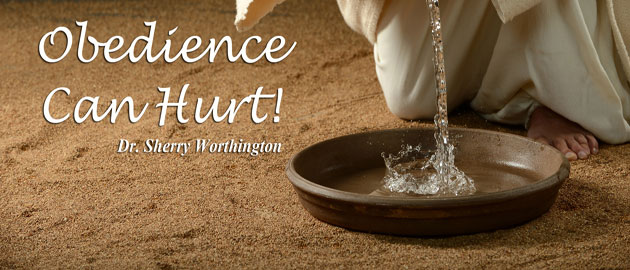
“What am I going to do? Why did the Lord tell me? Maybe Eli won’t ask me. Maybe I shouldn’t tell him all that God said.” Can you imagine being Samuel and the Lord telling you the future of someone you loved very much, and it was awful? I Samuel 3:15 states, “And Samuel lay until the morning and opened the doors of the house of the Lord. And Samuel feared to shew Eli the vision.”
The story of Samuel has always amazed me. His mother willingly gave him to God without promise of another child. God blessed her with more children, but not before she left Samuel in the temple with Eli. Scripture indicates that she only saw him once a year from the time he was 3 or 4 years old. I can only imagine how hard that was. She must have been familiar with the temple’s environment at that time. Hannah trusted God and left him with Eli. When chapter 2 of Samuel begins, Hannah is praising the Lord. Why? It does not show her crying as she leaves. It shows her rejoicing over her salvation.
Hannah was obedient to God, even when it hurt. I am sure it hurt her to leave her son with Eli, especially knowing that Eli’s sons were evil. It was well known in Israel. However, she honored God above herself, and she left him there. In I Samuel 2:29b, Eli is warned by a man of God of the consequences of honoring his sons above God.
As Samuel grew up in the temple, he served Eli faithfully. When the Lord called to him in the night, it was Samuel’s first encounter with the Lord (I Samuel 3:7).I cannot imagine being in his shoes. It is hard enough for me to tell someone something I know they don’t want to hear, and much less that their children were going to die and it was their fault.
I have read these verses over and over again, looking to see where God commanded Samuel to tell Eli the words of the Lord. God tells him that He is going to judge Eli’s family because Eli doesn’t restrain his children. Samuel has to tell Eli that he is a bad father, and it is too late now.
I imagine Samuel contemplated what to do as he lay in the bed that night. When Eli called to him the next morning, he asked him what the Lord said and not to hide anything. He instructs Samuel to tell him the truth. Samuel had a choice. Oswald Chambers points out that God did not tell Samuel to tell Eli the vision. He left it up to him. Samuel had to choose to be obedient. He could not lie to Eli to spare his feelings.
Isn’t it tempting to try to shield others from hurt and suffering? Sometimes it is ourselves we are trying to protect. We really don’t want to discuss someone’s sin and how it is affecting others. We don’t want to tell a friend that the person she trusted has betrayed her. There are numerous instances where we make soft decisions or soft pedal the truth to justify our actions.
Samuel made the right choice. He told Eli that God said, “…For I have told him that I will judge his house for ever for the iniquity which he knoweth; because his sons made themselves vile, and he restrained them not…”
I Samuel 3:13
The following chapters and verses explain the fate of Eli, and Samuel becomes the leader of Israel. It is a sad story, but it should give us all a wake-up call. As Christians, we face numerous decisions, but only one is truly right. We must be obedient to God no matter what the consequences. We make choices as adults about who to marry, what job to have, how to raise our children, and most importantly, what ways God wants us to serve. We serve Him in every choice we make. There is no way to list them all.
We have many times in our lives when we have to make a choice. When we started Pathway Christian Academy, many people tried to talk us out of it. People we loved and cared about thought it was a wrong decision and a waste of resources. My husband and I had to choose between following what we felt God was leading us to do and listening to those who thought they were looking out for our best interests. Some got upset with us for our choices. We did not want to hurt them, but we had to be obedient.
How many times in your life have you been at a fork in the road? How many times have you had to decide what decision to make? Some decisions involve your children. We were always worried about being too strict. I regret many more of the yes’s than I did the no’s where my children were concerned. When we are asked to do something or go somewhere that we really know we shouldn’t, but we don’t want to hurt people’s feelings, it can be a catastrophe. That “yes” that should have been a “no” can change a person’s life.
It takes courage and obedience to do God’s will, but it is the only way to please God. Just as it took courage for Samuel to speak to Eli, it will take courage for us to do the right thing. We will sometimes hurt others with the decisions we make. I am sure Mary was deeply hurt many times by yielding to God’s will. She watched her son be beaten and crucified. She had a choice. She could have told the angel she didn’t want to have God’s son. (Luke 1:38)
What choices are we making? Are we responding to God’s will, even though it may hurt ourselves or others? I can’t imagine David running from Saul all those years. He knew he was God’s anointed, but he had to run before he could reign. David could have said, “No, thank you,” but he didn’t. He accepted the call even though it was painful.
We must accept the call of God in our lives, just as others have done before us. We must choose obedience rather than comfort for ourselves or others. If we are to be in God’s will, we must do what God has called us to do.
May we proclaim, “No matter what the consequences, Lord, I will be obedient and serve you!”
Dr. Worthington has five children and twelve grandchildren. She serves as Principal of Pathway Christian Academy in Goldsboro.
“Again, the Kingdom of Heaven is like unto treasure hid in a field; the which when a man hath found, he hideth, and for joy thereof goeth and selleth all that he hath, and buyeth that field. Again, the Kingdom of Heaven is like unto a merchant man, seeking goodly pearls: Who, when he had found one pearl of great price, went and sold all that he had, and bought it.” Matthew 13:44-46
You might see a person with a successful career, houses, cars, and wealth. You might even see him helping the poor and being a friend to the hurting. He is known for supporting outcasts, standing up for his friends, and generously rewarding his loyal employees. You could label him as successful. Or, you could call him by his name. His name is Al…Al Capone.
He was successful, but we cannot call his “success” good because God was definitely displeased with how he achieved it. How do you define success? While many different answers exist, we all too often define it as the world does. However, as believers, we must always return to God’s Word and seek the biblical definition of success.
Some people believe that success means achieving financial freedom. For others, it signifies having more time or greater fulfillment. Success for us may also include being recognized by others as successful. As Christians, we need to return to the biblical foundations of defining success. We should focus on God’s definition of the kind of success that benefits His Kingdom.
Worldly standards do not define biblical success. Jesus, in many regards, looked like a failure to the world. True success should always reflect God’s purpose for our lives, the use of our spiritual gifts, and the opportunities God provides us to serve Him better. It is never simply about doing a good job or achieving something. Results do not measure success; it is measured by obedience.
May I confess something to you? According to the world’s standards, I have never been as successful in the ministry as I was in the secular world. I have never received the money, recognition, rewards, or approval in the ministry that I earned in the world. I received numerous promotions, awards, and bonuses. I continued in my secular job for about four years after I became a Christian, and during that time, I used my position to witness for Christ, leading several coworkers to our Lord. I used my income to support God’s work and help those in need. I was successful, but I wasn’t where God wanted me to be. Please let me make this clear, it was not where God wanted me to be. Such a place might be exactly where He wants you, but it was not where He wanted me.
I kept climbing higher and higher up the ladder of success until one day I realized my ladder was leaning against the wrong tree. The tree was not bad; it was just the wrong tree. My true ministry, the one God called me to pursue, could be best fulfilled within a ministry, a place dedicated to serving Christ. The company I worked for, the one that had been so good to me, the one that had given me the opportunity to succeed, was not in business to minister but to make a profit.
Now, as a capitalist, I don’t oppose any honest business making a profit. However, as a Christian businessman, my primary job, in which I worked about 60 hours a week, was not to serve Christ but to generate profits for my employer. Furthermore, if the business ever ceased to make a profit, it would close. Again, some very dedicated Christians could do that and be totally within God’s will, but, like so many other things, there has been a long list of things that God would not allow me to do. To accomplish my ministry, I had to work within the framework of a ministry, not a business. The question was not, with my spiritual gifts, where can I glorify God, because I could do that anywhere. Instead, the question became, where could I glorify God the most?
The path God gave me is most likely not the one you’re on; I understand that. However, God has laid out a path for you. You don’t need to keep throwing stuff against the wall to see what sticks. God has already prepared the way. The biblical definition of success is trusting God’s plan and the beautiful life God has already created for you.
In Matthew 13, we have a great collection of parables; mustard seed, leaven, buried treasure, pearls, dragnets, and more, all neatly packed into one place. We know they are about what the Kingdom of Heaven is like, but otherwise, their exact meanings are a bit uncertain. It is helpful to remember that the parables aren’t meant to have precise meanings anyway. Instead, they are designed to puzzle, to disturb, and to challenge our usual ways of thinking. They are encouraging us to keep returning again and again, exploring a wide range of interpretations. They provoke us to think more profound thoughts. They invite us to expand our imaginations and better understand the nature of man and of the God we serve.
Regarding parables and referring to Isaiah 6, the Lord instructs us in Mark 4:11-12 that the purpose of parables is to reveal the truth to humble hearts and conceal the truth from hard hearts.
As we look again at Matthew 13:45, it seems easy enough to understand. The merchant must be a disciple, and the pearl is Jesus. Or, perhaps Jesus is the merchant and the Kingdom is the pearl. Then again, could it be that the pearl is the church and Jesus is the merchant? Could it be any of those possibilities? Could there be even more? Maybe the parable is about our need to sacrifice what we have to follow Jesus, what we might call the “cost of discipleship.” If so, remember that the merchant isn’t just throwing everything away; he’s trading it in to buy something he wants more. He had a loss, but also a gain.
The Scripture also does not tell us what he does with this pearl. Perhaps he hides it away in a closet. Maybe he is not even sure why he wants this pearl so badly. Are you confused yet? We might see nuggets of truth in all the possibilities, but we know we need to do some digging. The truth is in there somewhere. Or, perhaps there is more than one truth hidden there; some Scriptures are designed that way.
One interesting facet about this story is that at the end, the merchant essentially withdraws from his business. Did you notice that? He appears to be giving up his livelihood. How is he going to make a living? By this decision, he is no longer a merchant. All he has is one pearl, which he does not intend to let go of. He has redefined himself by making one decision.
Now, we see what is happening. He has become a new man. He is not the same old merchant he used to be. He’s now the guy who knows he possesses something of great value, and he is not about to give it up! What’s more, he knows that if this “pearl” is something beyond all the other fine pearls, it can only increase in value. He will literally be able to live off the interest. This can change the way we look at all the other things he has been chasing! All the other stuff, whether they be diamonds or money, the right schools, the right job, the right neighborhood, the perfect family, all of those things he’s been trading for, fine as they may be, still left him with an unshakable feeling that he was missing something. This man has finally concluded that he must divest himself of all the things he has been chasing to make room for something of even more profound and lasting value. Is this story about you? I know it is about me! I found the great pearl and ceased to be a merchant. That’s simple enough.
That is what God wanted for me. I was to let go of every ounce of my self-righteous certainty and divest myself from all those fine pearls of what I thought defined me as successful, and have the courage to grab onto a deeper identity. I was to lay claim to something greater, even before I was sure what it was.
My carefully contrived self-image had to be relinquished. If I were no longer restrained by being a merchant, what else could I be? What else could you be? That doesn’t mean you can’t continue serving God right where you are. I could not do that, but I clearly understand that many can. If it is God’s will for your life, I applaud it and respect it. But perhaps even within the confines of where you are right now, God still wants you to place a higher priority on representing Christ. After all, He is a treasure of priceless value.
However, although I have purposely presented our Lord in this light to help you understand the multiple layers of the parables, I need to tell you that in this parable, Jesus is not the pearl of great price; you are. Now, let’s get back to our Scripture.
“Again, the Kingdom of Heaven is like unto treasure hid in a field; the which when a man hath found, he hideth, and for joy thereof goeth and selleth all that he hath, and buyeth that field. Again, the Kingdom of Heaven is like unto a merchant man, seeking goodly pearls: Who, when he had found one pearl of great price, went and sold all that he had, and bought it.”
I said earlier that the parables aren’t meant to have a clear meaning. Instead, they are designed to puzzle, to disturb, and to challenge our ways of thinking, encouraging us to keep returning again and again, exploring a wide range of interpretations. Parables reveal truth, sometimes in many layers, to those who seek it, while concealing truth from those who don’t really want it.
Verse 44 obviously refers to Israel, hidden, found, and hidden again until God comes to redeem the field. However, in Verses 45-46, the pearl of great price is the church. It is you and I, whom the very lifeblood of Christ has purchased. Have you noticed how often God instructs us to do as He does? He tells us to love as He loves, to work as He works, and to forgive as He forgives. Here we have the same principle. Here, He asks you to value Him as He values you. Serve Him and cherish Him, as He serves and cherishes you. In these verses, you and I are the pearl, and Jesus gives His very life to redeem us for Himself. But now, here is where it turns around; now you and I should be willing to do the same for Him.
So, here is the message: if you are where God wants you to be. If you are where your ministry can best shine, where you can serve Him fully and wholeheartedly, then you must shine right where you are. We need believers out there shining in the world. However, for others, you might shine better, or have more opportunities to shine, or better utilize your Spiritual gifts somewhere else. Perhaps like me, your ministry might need to be linked to another ministry to flourish. If so, that is where you need to be. After all, you belong to Christ, and you have been bought with a great price. You are His pearl, and He should be yours.
Dr. Worthington has been in the ministry for nearly fifty years and serves as President of Pathway Ministries and Christian Bible College.
Most of us have special children in our lives, whether it is our personal family or a child in our church or neighborhood. Children have a way of making us smile as well as frown. We come across children everywhere we go. I have laughed at something a child in the grocery store has said. It was just too cute. I have also cringed because of words I heard a child say to an adult.
“Wherefore we receiving a kingdom which cannot be moved, let us have grace, whereby we may serve God acceptably with reverence and godly fear:” Hebrews 12:28
I have numerous concerns about the changes the modern church has undergone over the past 50 years. For example, the architecture has undergone a significant transformation. Isn’t it interesting that on our Christmas cards, we still prefer images of old-fashioned churches? I’m not against the new look. I’m just saying that things have changed. Technology has also advanced. Most churches today are equipped with technology to enhance the engagement of their worship services. The music has drastically changed, and the Bibles most churches use are constantly being revised.
I can imagine if my granddad came back and visited one of our modern churches, he would be in a state of shock. It might be hard to predict what would shock him the most, but one of the things he would immediately notice is the change in what people wear. I don’t just mean the natural changes in style over 70 years. What I mean is that for many people, there is no difference between how they dress at church and how they dress any place else. Additionally, even if someone has to wear a suit or uniform to work, they often don’t dress up when they go to church.
There was once something called your “Sunday best,” and these were your special clothes that you kept reserved for special occasions, like going to church. Today, tank tops, tights, and flip flops are not uncommon at many churches. How should one dress for church? The modern answer is to dress the way you want to. Dress cool, comfortable, and casual, regardless of the occasion. A typical response is that God doesn’t care what clothes you wear, as He looks into the heart, and that’s what’s important. The heart is indeed essential, but the idea that God does not care about how you dress for worship is not entirely accurate. In this old man’s opinion, the growing trend of dressing down for church is not a good one.
First, let me remind you that it is a tremendous privilege of divine grace that we can begin each week by attending church to worship our Lord. What an incredible gift it is to enter into His presence. To truly appreciate our worship, however, it helps to understand a bit of its background and history. After God freed His people from Egyptian bondage, Israel was excited to meet God at Mount Sinai. But before they could come into His presence, God commanded that they consecrate themselves, wash their clothes, and stay away from the mountain. This demonstrated that God was holy and deserved respect and fear. It also showed that it mattered to Him how His people appeared before Him.
He demanded consecration. This was meant to be a break from their usual routine. We don’t have many details about exactly how this consecration was to be carried out, but clothing is mentioned. They didn’t have to wear different clothes, since many of them only had one set, but they did have to wash them. Since they were appearing before God, He requires holiness and respect, and this must be visible in their clothing.
This divine concern for how one appeared before God was also evident in the worship at the tabernacle and temple. There were graded levels of holiness surrounding these sanctuaries. The priests could enter the Holy Place, but only the High Priest was allowed to go into the Holy of Holies. To approach God, they had to dress according to God’s dress code. This was very detailed for the high priest (Exodus 28:1-39). The ordinary priests were required to wear linen clothes that, like the high priest’s, were made for “glory and beauty”(Exodus 28:2).
The point is, that the clothes were meant to reflect the fact that the priests were in God’s presence. The importance of proper dress is emphasized by the fact that even if a priest was doing something as simple as cleaning out the ashes of the burnt offering, he had to wear the clothes that the Lord had specified for this task (Leviticus 6:10-11). All of this is relevant today as we recognize the new dispensation we’re in. God has now freed His people from the law. You are now also a priest, and when you worship in spirit and in truth, you join with the worship of angels and the saints of old. You come to church to join thousands upon thousands in a joyful gathering. The angels are clothed in radiant glory, the saints are dressed in white apparel, and you, well, you have on your Jack Daniels T-shirt.
But it gets even better. Because of the sprinkled blood of Christ, we as priests to God are permitted to do what only the high priest in the Old Testament could do. As we worship and call on the Lord’s name, we can enter the Most Holy Place! (Hebrews 10:19-22). Who can fully understand and appreciate what this means? This vital truth influences the clothes we choose to wear when attending church to worship in God’s presence. If God cared about how the priests approached Him in the Old Testament, would He be less concerned today when the priestly privileges of the Most Holy Place are available to all believers? Our God remains the same. He expects us to approach Him with awe, reverence, and in our most respectful attire.
In line with the age we live in, the age of grace, God leaves the details of our dress up to us. We shouldn’t need to create rules for how to dress for worship, because the Lord our God has already given us the ability to make those decisions. Most of us know how to dress for a formal wedding or funeral. Every leader in the world except Zelenskyy knows how to dress when meeting the President at the White House. We should be able to figure this out.
I know it is very easy to become unwittingly influenced by the pagan culture around us. We have this desire to fit in. But the Bible says we are to: “Keep thy foot when thou goest to the house of God” (Ecclesiastes 5:1). When we enter a church, we are entering a space specifically set apart for worship. We step into the special presence of God, and the clothes we wear must reflect this profound reality. We sometimes wonder why the world has lost its respect for God; could it be that to the world, it looks like we have lost our respect for God?
It may be understandable for an unchurched person to attend without being respectfully dressed, but not for us. When we consider that even our current worldly culture values dress codes to ensure proper attire for all kinds of occasions, even playing golf at some courses requires a particular form of dress. Let us not lose our sense of awe and wonder at being in God’s presence. It is a privilege we must not take for granted. While the condition of your heart will always be more important than your outward appearance, your outward appearance still makes a statement about what is in your heart. You have been taught that God communicates His word to you in many different ways, and each of those ways is protected.
He usually communicates through the Bible, through the Holy Spirit, through His prophets, and through types and illustrations. We also communicate through various forms. We might do it with our words, our writing, the places we visit, and our general attitudes and ethics. However, we also communicate through our appearance. Our Sunday best was often a reflection, a physical sign of the inner preparation we had made before entering worship. It also showed respect for God and reverence for the sacredness of the worship service. I understand that we must avoid legalism. We also need to create a welcoming environment where everyone can feel comfortable, regardless of their attire. However, we can also go too far in the wrong direction.
Some might remind us that the Bible teaches us that during this dispensation, every day is holy. We are taught that we should honor God every day. Sunday is no more sacred than Monday or Tuesday. The New Testament also teaches us that every place is holy (John 4:21, 23-24). So, if every day, every place, and even every hour is sacred to the Christian, does that mean being at church is no different from being at a ball game? No, I don’t think it is at all. In fact, I believe for most of us, the hours we spend at church are the most holy moments of the week.
First, it is a command to attend church (Hebrews 10:25). God didn’t command you to go to school or to the restaurant after church. He doesn’t command you to go to Disney World, but He does command you to be at church.
Second, the church is the best place to surround yourself with champions. It is a powerful environment filled with influential people. I dress up out of respect for God, but also out of respect for other people I wish to honor.
Third, this is a place where Jesus has promised to join us in a most profound way.
So, if this is the most holy hour of the week, then do you suppose God has some guidelines for our behavior while we are here? I think so. Acceptable worship is accompanied by reverence and fear, with respect and awe. Our modern generation has lost the heart that aligns with what this sacred hour deserves. We see this in our church leaders, the very ones who should be setting the example. They know what the Scripture says, and they understand the meaning of the words. They just don’t apply them. I believe church leaders should set the tone and guide the church away from casual worship toward something more honoring and fitting for the holiest hour of the week.
This cannot be fixed simply by creating rules; it should be addressed by awakening internal, heartfelt reverence. We don’t outlaw the atmosphere of super-casual, entertainment-based gatherings; we just gently steer in that direction. Leaders initiated this downward spiral, and leaders must now correct it. Pastors must approach this hour with a total Godward focus. This is a moment of God-centered seriousness. People come to hear a man share a message that our souls, when not deadened by human emotions, has been craving for. Most of our people don’t realize this because they’ve never experienced the real thing. Something deeply stabilizing, strengthening, refining, and fulfilling at the core of our being, that’s what people yearn for. They have tried to fill that need with casual entertainment. They won’t understand what they’re missing until they are shown it over time.
Some of our readers remember the old-time Pentecostal Holiness churches. Most of them have changed now, but back then, they were known for emphasizing modesty, humility, and the clear distinction between men and women in their dress. Although not an infallible guide, they knew that outward appearance was often a reflection of an individual’s respect for God and of their inward spiritual state. Part of the problem is that pastors may be amazed at what God does, but they are no longer amazed at who He is. Everything else is secondary. He’s the ultimate treasure, the primary value, the brightest hope, the one they are all willing to live for and die for.
God’s grace will never seem as incredible as it should be if our people do not tremble at God’s purity and holy wrath against sin. Did it bother you how Zelenskyy dressed when he met with the President? It bothered me. If it does bother you, you might consider the implications at every church service, when your Pastor tries to take you into the presence of the King of Kings. Church leaders should remind God’s people that they are supernatural beings. Church is not a place for ordinary folks to gather for business or entertainment. Instead, it is a place where blood-washed, supernatural beings come together to worship the King. Once we grasp this, I believe God’s people will be eager to encounter Him in a way that makes flip-flops seem a bit out of place.
Dr. Worthington has been in the ministry nearly fifty years and serves as President of Pathway Ministries and Christian Bible College.