
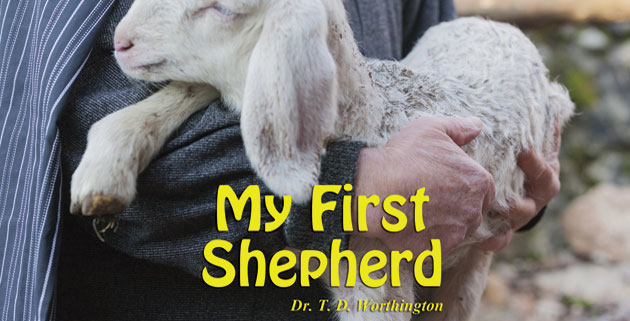
In the story of the Good Shepherd, Jesus describes Himself as the Shepherd and His followers as the sheep. His sheep listen to His voice, while others are not of His fold because they simply choose not to listen. Jesus assures us that if we are willing to listen to His voice, we can never be taken away from God the Father, since Jesus and the Father are one. Like any Good Shepherd, Jesus is dedicated to keeping all His sheep safe, even those who sometimes wander away.
Traditionally, it is men that are often seen as the shepherds; protecting, providing for, and loving those in their care. We picture men as the strong, sturdy shepherds described in the Bible. However, as we celebrate Mother’s Day, I see a strong connection between shepherds and mothers. Mothers have always guided and cared for their families, and today, they might even fill that role better than men.
For many of us, our first encounter with our Lord as the Good Shepherd came through a loving mother. We learn to trust God, who calls us by name and protects us, because we first felt that kind of unconditional love from our mothers. Imagine being loved simply because someone feels you are worthy. I am not trying to change how we see God, but in life, we often first experience God’s love through our mothers. Quite often, it is later in life that we come to know God as the Good Shepherd. We recognize His voice because it echoes in our memories and sounds so much like the unconditional love song of our mothers. This is why having a mother who is absent, self-centered, or uninterested can leave a deep impact. If our early experiences of love come with conditions, it can be harder to understand the Good Shepherd. But when we experience genuine motherly love, it helps us see how deeply God loves us.
Sherry and I both took on a shepherd’s duty of guiding our children, each with different roles. But when I think about all the children she has shepherded at the academy over the years, I am in awe. She is a mother who would do anything to protect those placed in her care, even those who occasionally stray from the fold.
In the film “The Passion of the Christ,” you might remember the scene where Jesus carries His cross, and Mary desperately tries to push through the crowds to reach her Son. The scene switches between Jesus carrying the cross and Jesus as a toddler running; these flashbacks are from Mary’s perspective. She sees Him running, then He trips and falls. Like any good mother, she drops everything and rushes to Him frantically. She reaches Him and gently says, “I’m here.”
Then the scene shifts back to the present. Mary runs to Jesus as He stumbles under the weight of the cross. She reaches Him, much like a shepherd finding a lost sheep, and says, “I’m here.” This time, Jesus changes the story. As she holds Him, He touches her face and says, “See Mother! I make all things new.” Then He picks up His cross and moves on. This is the last time Mary touches her Son before He dies. The scene may take some creative liberties, but it is still very powerful.
All of us will reach, or have already reached, a point when, like Jesus, we must take what we’ve learned from our parents and go out into the world to find our purpose. Jesus knew His mission and kept moving toward Golgotha. Hopefully, our children will also discover and accept their purpose, even if it means carrying a cross. Even on the cross, Jesus remembered His Mother and made sure she would be cared for by telling John she was now his responsibility.
We often see mothers as meek and gentle, just like we picture shepherds as simple guys who passively walk around in pastures wearing flowing robes and moving sheep around. But neither of these images are really accurate. I can’t speak for anyone else’s mom, but my mom, although she could be gentle, was definitely not weak.
Shepherds are not just gentle farmers walking through fields. They are often tough and determined. Sheep, like people, can be stubborn. When a shepherd uses his staff to guide the sheep, it is not always gentle. Sometimes, he must be firm–not out of anger, but out of love. Mothers can understand this. When they are stern with their children, it comes from love, not meanness. Like my mom, Jesus sometimes became frustrated with people who would not listen to Him. But even when He was annoyed, it always came from a place of love.
Shepherds and mothers share many similarities. Recognizing these commonalities helps us better understand motherhood and how God cares for us. Jesus called Himself the Good Shepherd, and shepherding has many qualities in common with good mothering.
Shepherds always watch for danger to protect their sheep. Similarly, moms guide us away from harm, reminding us, “Look both ways before you cross the street.” Moms also tell us to go places in groups and to be cautious of strangers. Today, they warn us about dangers on the internet and social media. Likewise, Jesus warned us about spiritual dangers like greed, laziness, envy, fear, worry, and thinking the world revolves around us. Jesus also teaches us to bring Him our burdens so we may find rest and comfort.
Moms teach us values that help us live meaningful lives. They say, “If you can’t say something nice, don’t say anything at all.” Jesus teaches us to do unto others as you would have them do unto you.
We often think of moms when it comes to food. They encourage us to eat our vegetables and try new things so we stay healthy. Similarly, Jesus asks us to nourish our spirits through prayer, study, helping others, and building relationships. He gives us the bread of life and the cup of forgiveness.
Moms remind us to be prepared, even telling us to wear clean underwear, just in case. Jesus also teaches us to be ready and to stay alert for the snares of the devil and for opportunities to serve and set a good example.
Jesus describes Himself as the Good Shepherd. He says, “I know my sheep, and they know me.” They listen to His voice. He gives us a sense of belonging. If you ever wonder if anyone cares, the answer is yes. Your prayers are heard; they do not go unanswered. The Good Shepherd listens for the cries of His sheep.
As we honor our mothers as modern-day examples of the Good Shepherd, we are reminded that a mother heals with a kiss, a gentle touch, and her steady presence. Her love does not fade, even if we make foolish decisions or get into trouble. She knows us by name, even our middle names, and cares for us even when we are grown. She helps us avoid too many snacks and brings us to the table for healthy food and drink. A mother understands why our puppy died and why we don’t like spinach. She makes sacrifices for us, such as cooking our favorite meals or helping with homework. A Christian mother prays for us, not because she has to, but because she wants to.
I used to pray for my mom every day, but I don’t anymore because she is in heaven. Now, I pray for the mothers of my grandchildren and great-grandchildren. I also pray for those who struggled to become mothers but couldn’t, and for anyone who has lost a child through miscarriage, illness, accident, or violence.
There is great comfort in belonging to the Good Shepherd. Being part of a family, club, church, nation, or sheepfold means loyalty. Jesus is loyal to us and promises never to leave us. He will search for us when we are lost, even leaving the ninety-nine to find the one who strays and bring them back to the right path.
He is the Good Shepherd. In fact, He is the Perfect Shepherd, and I understand that role better because I first had a good mother.
Dr. Worthington has been in the ministry for nearly fifty years and serves as President of Pathway Ministries and Christian Bible College.